
The Criterion Channel
The Criterion CollectionEntertainment
4.51.92K Reviews
- Version
- 10.303.1
- Installs
- 100.00K
- Age Rating
- Teen
Screenshots
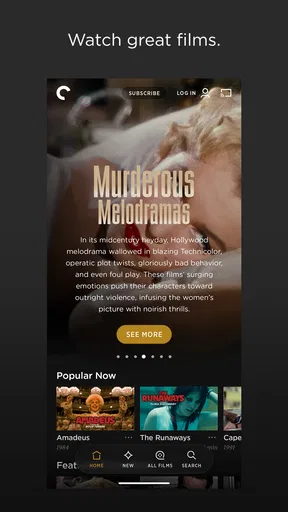
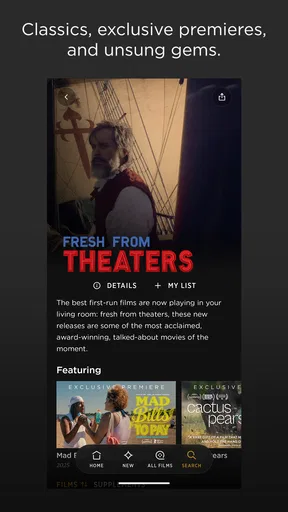


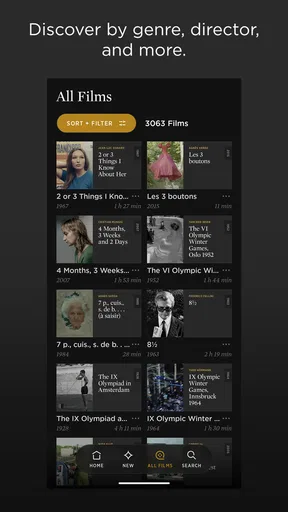
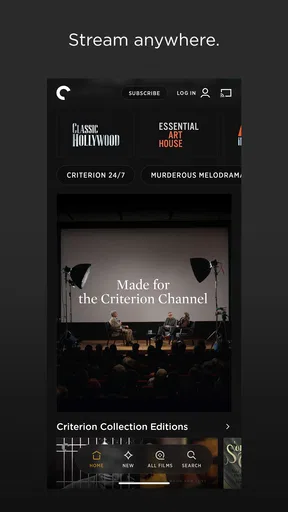
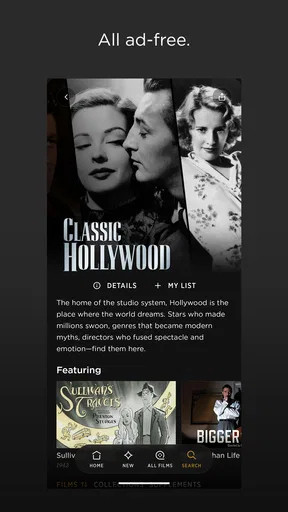

Our Review of The Criterion Channel
 Analysis by Appyee
Watching an older film is often more demanding than pressing play. I may want context before choosing a title, a calm way to browse after work, or a service that treats classic cinema as more than background entertainment. The Criterion Channel is built for that kind of viewing. Developed by The Criterion Collection, this free Entertainment app gives access to classic movies and related viewing material, while optional in-app purchases range from $10.99 to $99.99 per item.
I spent time looking at it not only as a film library, but also as something a person might use in different physical, sensory, and everyday situations. My overall impression is positive: it feels aimed at viewers who enjoy deliberate discovery rather than endless algorithmic scrolling. At the same time, its usefulness depends on how comfortably you can read, browse, listen, and manage a film session on your particular device.
How comfortably can different viewers use it?
I find that comfort with this app depends on more than being able to press play: reading descriptions, navigating a focused film catalog, and settling into a full-length movie all shape the experience. In the next section, I’ll look at how those demands can vary with a viewer’s device, attention, and access needs, and why a little preparation can make choosing a film feel easier.
Readability and navigation shape the first impression
The most important strength here is the editorial identity. The app does not feel like a general-purpose video shelf where older films are buried among whatever happens to be popular. Its connection with The Criterion Collection gives the experience a clear sense of purpose: I open it expecting to find cinema with history, style, or critical interest rather than simply the newest mainstream release.
That focus can make browsing easier for someone who feels overwhelmed by huge entertainment catalogs. Instead of starting with an empty search box and having to know exactly what to watch, I can approach the service through moods, filmmakers, periods, or types of cinema. This is especially helpful for a new viewer who wants to explore classic movies but does not yet know where to begin.
There is a trade-off, though. A curated catalog can still feel dense when many titles, collections, descriptions, and supporting materials compete for attention. People with low vision, reading fatigue, dyslexia, or limited concentration may prefer to make a short list before settling in. I find it more comfortable to decide on a small group of possibilities first, then return to one title, rather than repeatedly scanning the entire service.
Text-heavy discovery is both a benefit and a barrier. Film notes and contextual information can make a choice more meaningful, but they also ask the viewer to read before watching. If your priority is immediate playback with almost no browsing, a simpler mainstream streaming app may feel quicker. The Criterion Channel rewards curiosity, not impatience.
On Android, the app supports devices running Android 8.0 or later. That makes it available to people using a range of phones and tablets, although the practical comfort of reading depends greatly on screen size, display settings, and the device’s own magnification or text options. I would choose a larger screen when possible, particularly for browsing essays or comparing several possible films.
The current version is 10.303.1, and the app has been available since April 8, 2019. Those details matter less than the everyday question of whether the interface feels dependable on your device. Before committing to a long viewing routine, I would open several pages, test the search and browsing flow, and check whether the text and controls remain comfortable with your preferred system settings.
Motor and sensory considerations during a film session
For viewers with limited hand movement, the best workflow is to reduce the number of decisions made after the film starts. I would browse while seated comfortably, select a title, and prepare volume and display settings before beginning. That avoids repeated small taps during playback, which can be tiring for someone with tremors, joint pain, or reduced precision.
A phone can be convenient for choosing a film, but it is not always the most comfortable viewing device. Holding a small screen for a long movie may create strain, and frequent repositioning can be difficult for viewers with motor limitations. A tablet or a larger connected display is likely to be a better physical setup when available. The app’s value is therefore tied not only to its catalog, but also to the way your device fits into your body and room.
For people who are sensitive to bright images, rapid changes, or loud sound, classic cinema can be unpredictable. Films from different eras and countries vary widely in contrast, pacing, audio quality, and visual style. I would not assume that an older film will automatically be gentle on the senses. Lowering display brightness, adjusting system sound, and taking breaks can make a session easier, but those are personal adjustments rather than guarantees about individual titles.
Audio is another important consideration. Someone with hearing loss may need to investigate the viewing options for a specific title before relying on it for an accessible movie night. Likewise, a viewer who cannot depend on sound alone should not assume that every film will provide the same helpful text support. The sensible approach is to check the title’s available options in the app before planning a group screening around it.
This is one area where the service’s film-first character can require extra preparation. A general streaming platform may make accessibility information more visible across a much larger range of current content. Here, I would treat each film as its own case, especially when inviting someone with particular hearing or vision needs.
Situational access: when the app fits real life
The strongest everyday use case is a planned evening. Imagine finishing work, wanting something more substantial than short clips, and choosing a film without spending an hour in a general streaming catalog. I would browse earlier in the day, read enough about a few titles to understand their tone, and save one option for the evening. That small amount of preparation makes the experience calmer and reduces the mental effort of choosing when I am already tired.
It also works well for a personal learning routine. I can choose one filmmaker, movement, or period and watch with more attention than I would give a random recommendation. The surrounding material can turn a film night into a gentle course in cinema, although viewers who prefer purely casual entertainment may find that level of context unnecessary.
The service is less ideal when the household wants a universally familiar blockbuster immediately. If several people have different tastes, a broad mainstream service may settle the argument faster. The Criterion Channel is better suited to a household willing to explore, discuss, and occasionally accept that a film may be challenging rather than instantly entertaining.
For shared viewing, I would plan around the least comfortable participant. Check the screen position, keep the remote or device within easy reach, and agree on volume before starting. If someone needs subtitles, stronger audio, frequent pauses, or a shorter session, those needs should guide the setup. The app can be part of an inclusive movie night, but it cannot remove the practical work of arranging one.
Travel and irregular schedules introduce another question: can you rely on the app wherever you happen to be? I would not build an important trip around assumptions about playback, connectivity, or title availability. Instead, I would test the exact device and connection beforehand and confirm that the film I want is accessible at the moment I plan to watch it. This is sensible for any streaming service, but particularly important when the appeal is a carefully selected film rather than disposable viewing.
What the price and audience mean in practice
The app itself is free to install, and its store rating sits at 4.5 from around 5.2 thousand ratings. It has passed 100 thousand installs, which suggests a meaningful audience without making it feel like a mass-market video utility. The developer is The Criterion Collection, so the service has a recognizable specialist identity rather than the broadest possible entertainment brief.
The Teen content rating is worth taking seriously. A classic film is not automatically suitable for every family member, and older works can contain mature themes, disturbing situations, strong language, or historical attitudes that need discussion. I would review the individual film’s description before handing the device to a younger viewer or choosing something for a mixed-age group.
Because optional purchases cost between $10.99 and $99.99 per item, I would pay attention to what I am selecting before confirming anything. The free download makes exploration easier, but it does not mean every part of the experience is free. Someone who wants occasional casual viewing should understand the purchase model first, while a committed film enthusiast may see more value in treating the app as a focused cinema destination.
The service is a particularly good match for viewers who enjoy subtitles, film history, international cinema, directors’ bodies of work, and slow discovery. It is less convincing for someone who mainly wants live television, current chart hits, children’s programming, or a single place for every household interest. Choosing it alongside another streaming service may make more sense than expecting it to replace all of them.
Remaining barriers that deserve attention
The first barrier is cognitive rather than technical. The app asks me to make choices based on unfamiliar names, eras, and styles. That is rewarding once I develop confidence, but a newcomer can feel unsure about whether a title is a good starting point. I would begin with shorter descriptions and a clear personal goal, such as “one approachable film from this director,” instead of trying to understand the whole catalog at once.
The second barrier is the gap between a film’s cultural importance and its immediate comfort. Some works are valuable precisely because they challenge expectations, but that does not make them suitable for every mood or sensory situation. A viewer dealing with fatigue, migraine sensitivity, hearing difficulty, or limited attention may need a more predictable option on a particular day.
The third is device dependence. Reading, tapping, holding, and listening all feel different on a small phone than on a tablet or television setup. I would not judge the app only from a quick phone test if my real plan is to watch on a larger screen. Conversely, someone who relies on a phone alone should test browsing for a while, because a beautiful catalog can still become tiring if the text and controls are too cramped.
There is also a social barrier for households with unequal film interests. One person may appreciate a carefully restored classic while another wants a familiar comedy without preparation. In that situation, the app is not the wrong product; it is simply a specialized one. I would recommend it as a personal or enthusiast-oriented service rather than as the only entertainment option for a large family.
Finally, I would avoid treating the app as automatically accessible just because it offers a thoughtful film library. Inclusive use depends on the title, the device, the available viewing options, the room, and the viewer. That does not cancel out the app’s strengths, but it does mean that people with specific access requirements should verify their preferred setup before making a purchase or planning an event.
My inclusive verdict
After using it as a film-discovery tool rather than merely a player, I see The Criterion Channel as a strong choice for people who want classic cinema presented with intention. Its focused identity helps me avoid the shapeless feeling of a huge general catalog, and its connection with The Criterion Collection gives the app a clear reason to exist.
Its biggest inclusive strength is flexibility of viewing intention: I can approach one film casually, build a personal study path, or plan a thoughtful shared evening. That flexibility becomes more useful when I adapt the device, screen size, sound level, lighting, and session length to the person watching.
I would recommend it to an adult or older teen who enjoys exploring films and is comfortable spending a little time choosing. I would also recommend testing it on the actual device and setup used at home, especially if reading comfort, motor control, hearing, or visual sensitivity affects the decision. The app’s Teen rating makes it unsuitable as an unquestioned children’s service, and its optional purchase range means I would review each transaction carefully.
I would skip it if I want instant, low-effort entertainment, a broad family catalog, or a service designed mainly around the newest releases. A mainstream alternative will usually be easier for mixed tastes and spontaneous group decisions. But for a viewer who wants a more considered route into classic movies, The Criterion Channel offers a distinctive experience that feels worth exploring, provided its browsing demands and title-by-title access considerations fit the way you watch.
My final advice is simple: install it for the catalog’s character, not just the promise of another streaming library. Start with one film that genuinely interests you, use the largest comfortable screen available, prepare the room for the person watching, and check the title’s viewing details before settling in. With that approach, the app becomes less about collecting choices and more about making one good choice at a time.
Verdict
Strengths of The Criterion Channel
- Excellent selection of classic, independent, and international films.
- Includes curated collections with insightful introductions and commentary.
- Many films offer subtitles, making global cinema more accessible.
- Supports offline downloads for watching films without an internet connection.
- Covers rare titles that are difficult to find on mainstream streaming services.
Limitations of The Criterion Channel
- The catalog is smaller and more specialized than general streaming platforms.
- Some films have limited availability because of changing licensing agreements.
- A subscription is required; there is no permanent free tier.
- Video quality and subtitle options can vary between individual titles.
- The app may feel less convenient for viewers seeking mainstream releases.
Similar Picks in This Category
View All
Google Play Games
Google LLC3.9

Netflix
Netflix, Inc.4.8

YouTube Kids
Google LLC4.2

Disney+
Disney4.4

Prime Video
Amazon Mobile LLC4.7

Steam
Valve Corporation3.2
Frequently Asked Questions
What is The Criterion Channel?
The Criterion Channel is a subscription-based streaming service focused on classic, independent, international, and art-house cinema. Its library includes films from The Criterion Collection, as well as selections from other respected distributors and filmmakers. Alongside movies, the app offers introductions, interviews, documentaries, commentaries, curated programs, and themed collections that provide useful context for viewers who want more than a standard streaming experience.
How much does The Criterion Channel cost, and is there a free trial?
The Criterion Channel generally requires a paid membership, with monthly and annual subscription options available through its official website or supported app stores. Pricing, taxes, promotional offers, and trial availability can change over time, so it is best to check the current subscription screen before signing up. If a free trial is offered, remember to cancel before it ends to avoid automatic renewal.
Which devices support The Criterion Channel?
The Criterion Channel can be watched on compatible Android and iOS devices, web browsers, and selected smart TVs, streaming players, and television platforms. Availability may vary by device model, operating-system version, and region. Before downloading, check the app-store listing and your television’s supported applications. A reliable internet connection is recommended, particularly when streaming high-quality video over mobile data.
Can I download Criterion Channel films for offline viewing?
Offline viewing availability may depend on the current app version, device, operating system, subscription status, and licensing restrictions. Not every title is necessarily eligible for download, and downloaded content can expire or become unavailable when a film leaves the service. If offline playback is important to you, review the download controls inside the app and confirm that your device has enough storage space.
Is The Criterion Channel available everywhere, and are subtitles included?
The Criterion Channel is not available in every country, because its catalog depends on regional licensing agreements. The selection can also change over time, meaning a film available in one location may be absent in another. Many titles include subtitles or captions, but language options differ by film. Check the title details and playback settings to confirm accessibility features before watching.
